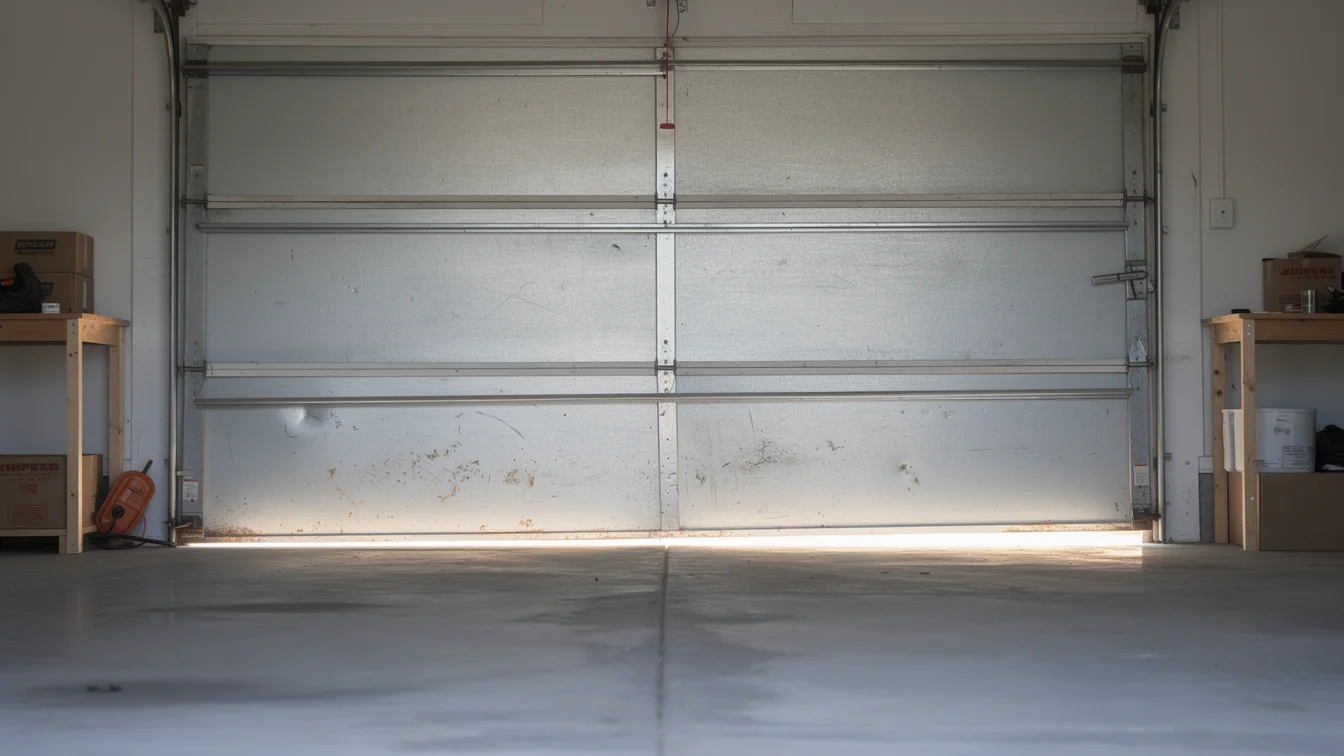
 What Florence's 1980s Housing Stock Means for Your Garage Door
Florence homes mostly date to the 1980s and sit in a cold-severe climate band.
What Your Garage Door Is Trying to Tell You in Florence
Florence homes date mostly from 1938 to 2005, and cold winters stress aging torsion hardware. Here's what garage door noises actually mean, and when to call.
Local detail
What Is Going On
Most houses around here went up between 1938 and 2005, with the typical build landing around 1984 - old enough that the original torsion springs are long past due, and old enough that a lot of openers have been swapped once already without anyone touching the hardware above them. That's the context for every noise that comes out of your garage.
A rhythmic thump as the door travels is usually a flat spot on a roller, not a structural problem. A sharp bang, especially right after the door closes, is almost always a torsion spring letting go - the kind of thing that happens on schedule once a spring from the 1980s or 90s finally runs out its cycles. Grinding on the way up points to a bearing plate or a worn bushing at the spring shaft, both common on hardware this age across the local stock.
A low groan from the opener itself, versus a crack from the springs, tells you whether you're looking at a motor problem or a mechanical one. They sound different once you know what you're listening for, and on a house with original or near-original hardware, the mechanical half of that list comes up a lot more often than it would on newer construction.
The area
When Waiting Is Fine
Not every sound is a call-today sound. A single squeak on one hinge, especially after a stretch of dry weather, usually clears up with a shot of lithium grease on the hinge pin and the rollers. If the door still opens smooth and level and the noise doesn't change week to week, you can leave it for your next free Saturday.
A little rattle in the track brackets on an older house is also common - wood framing settles over decades, and a quarter-turn on the lag bolts fixes it without a service call. We won't pretend every noise needs a truck; a lot of what we hear about over the phone is a five-minute fix with a can of spray lubricant and a wrench.
What doesn't belong on the wait-and-see list: anything that's gotten louder over two or three uses, anything that changed suddenly rather than gradually, and anything involving the cables or the springs themselves. Those don't self-correct, and they don't improve with grease.
What we find
What Local Conditions Do
Florence sits in a cold-and-severe climate band, and a steel torsion spring that's rated for ten thousand cycles in a mild climate loses cycles faster here when the grease stiffens below freezing. Cold metal is also more brittle metal - a spring near the end of its life is more likely to snap on a hard winter morning than on a mild afternoon, which is part of why winter is when we hear from the most people with hardware from the 1980s and 90s.
Across the area's roughly 97,578 households, a lot of garages are holding onto openers and spring sets installed when the house was built in the 1980s or 90s, and cold cycling is what finally exposes the wear that's been building for years. Nylon rollers crack in cold temperatures faster than steel ones do, and cables that have started to fray grab worse when the lubricant thickens.
None of this means the door is failing because of the cold alone. It means the cold is the thing that reveals what age was already doing.
How we work
When It Stops Being a DIY Job
A door built to the standards of 1984 construction wasn't engineered for the extra load today's insulated steel doors carry, which is why older torsion hardware grinds under doors it was never sized for once an owner upgrades the door but not the springs. That mismatch is one of the more common reasons we get called out - not a defect, just hardware doing a job it was never sized for.
Anything involving a torsion spring under tension is not a homeowner repair. The spring stores enough force to break a hand or worse, and the tools for winding it safely aren't something most garages own. A snapped cable is the same category - it's wound tight and it will whip.
With median household income here at $80,814, replacing a spring set is usually a smaller hit to the budget than most owners expect, and it's almost always cheaper than letting a mismatched or worn spring take out the opener or bend a track on its way down. If the door is off its track, or a panel is visibly bent, stop operating it by remote or wall switch until someone's looked at it. We don't recommend forcing a stuck door with the opener - that's how a cheap fix turns into a new door.
Questions
Common questions
Why did my garage door suddenly get loud this winter?
Cold stiffens the lubricant on springs and rollers and makes aging steel more brittle, so hardware that was already near the end of its life tends to show it in cold weather. In Florence's cold climate, that often means a spring close to its cycle limit, especially on houses with original hardware from the 1980s or 90s.
Is a grinding noise from the springs dangerous?
It's not immediately dangerous, but it's a sign the spring's bearing or bushing is worn, and that wear gets worse under tension until it fails, usually without warning. Treat grinding as a signal to get it looked at before it becomes a snapped spring.
Can I just oil everything and call it fixed?
Lubricant solves squeaks from hinges and track brackets, but it won't fix a worn spring, a frayed cable, or a cracked roller. If the noise keeps coming back after lubrication, the part is wearing out, not just dry.
My door is original to the house. Should I worry?
A door that's original to a house built decades ago has had a long run, and the torsion springs in particular have a rated cycle life that's likely been used up. It's worth having the spring and cable set checked even if the door still looks fine.
Recommendation
You Might Also Like
More garage door guides for Florence homeowners.
What Florence's 1980s Housing Stock Means for Your Garage Door
Florence homes mostly date to the 1980s and sit in a cold-severe climate band.
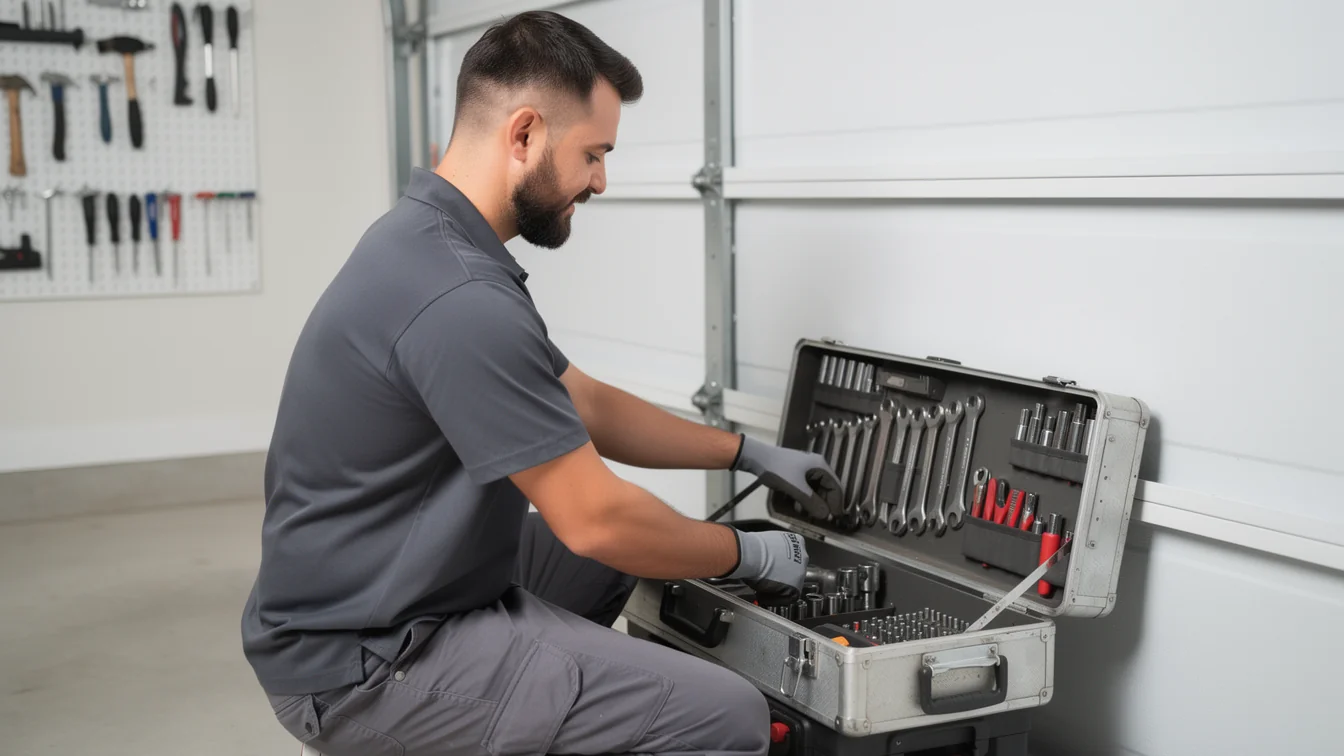 What a Service Call Actually Covers
A look at what a Florence Garage Door Pros service call actually checks, from 1980s-era torsion hardware to cold-weather spring tension on local homes.
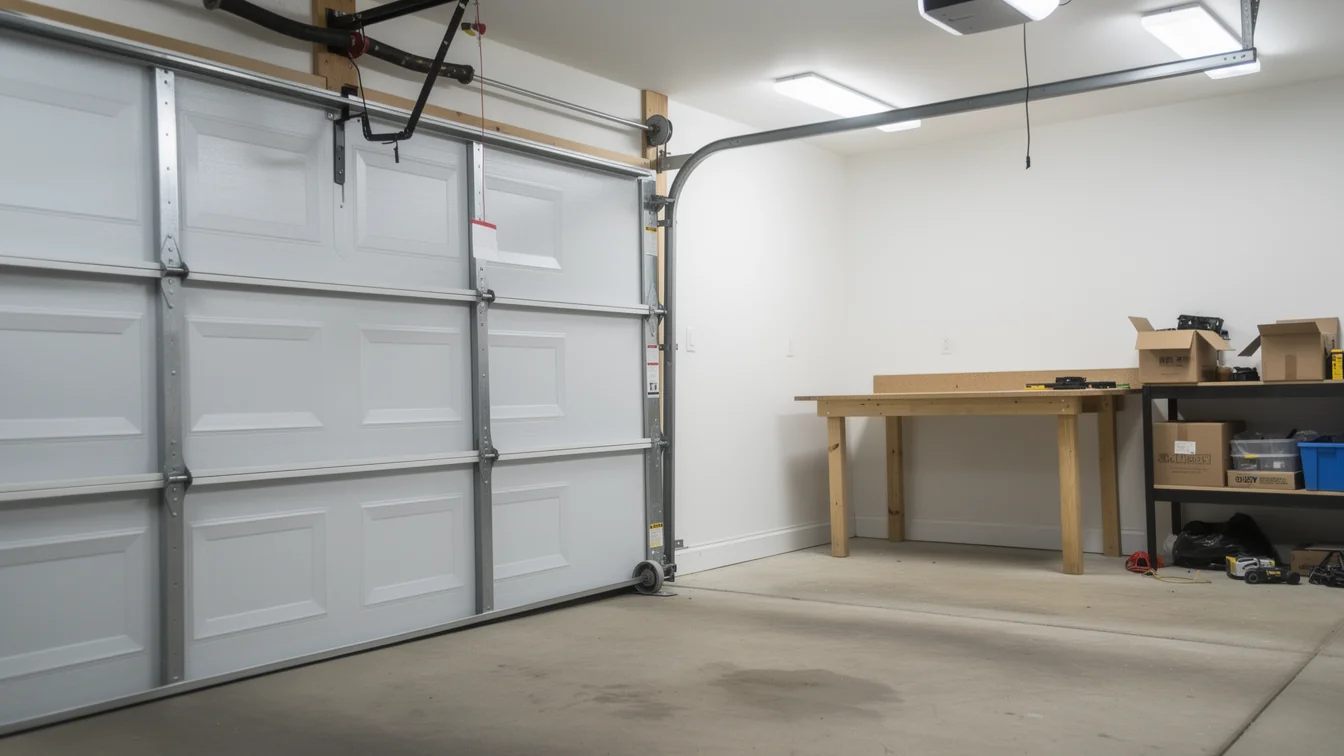 Why Garage Doors Go Off Track in Florence's Older Homes
In Florence, KY, most garage doors date to the 1980s and 90s.
Ready when you are
Need a garage door sorted in Florence?
Florence Garage Door Pros repairs and installs garage doors, springs and openers in Florence, KY and the surrounding area.