 What Florence's 1980s Housing Stock Means for Your Garage Door
Florence homes mostly date to the 1980s and sit in a cold-severe climate band.
What's actually wrong with your garage door in Florence
A look at why Florence garages fail the way they do: 1980s-era doors, cold-severe winters, and the parts that wear out first on houses built here between 1938 and 2005.
Local detail
What Is Going On
Most of the houses in this service area went up between 1938 and 2005, and the median build year lands right around 1984. That one number explains a lot of the calls we get. A door and opener installed in the mid-80s is now pushing forty years old, and across the 31 named areas that make up this market, the bulk of the stock is 1980s and 90s construction - not spread evenly over decades, but bunched into that window. That means a lot of garages in this area are hitting spring fatigue, roller wear, and opener gear failure at the same time, because they were all built in the same handful of years. It's not that these doors were built badly. Torsion springs are rated for a number of cycles, not a number of years, and a door that opens twice a day for thirty-plus years has used up what it was sold to do. Add a steel panel that's been painted over a few times and hardware that was never upgraded, and you get the pattern we see: original one-piece doors still on their first spring, still on their first opener, finally giving out.
The area
When Waiting Is Fine
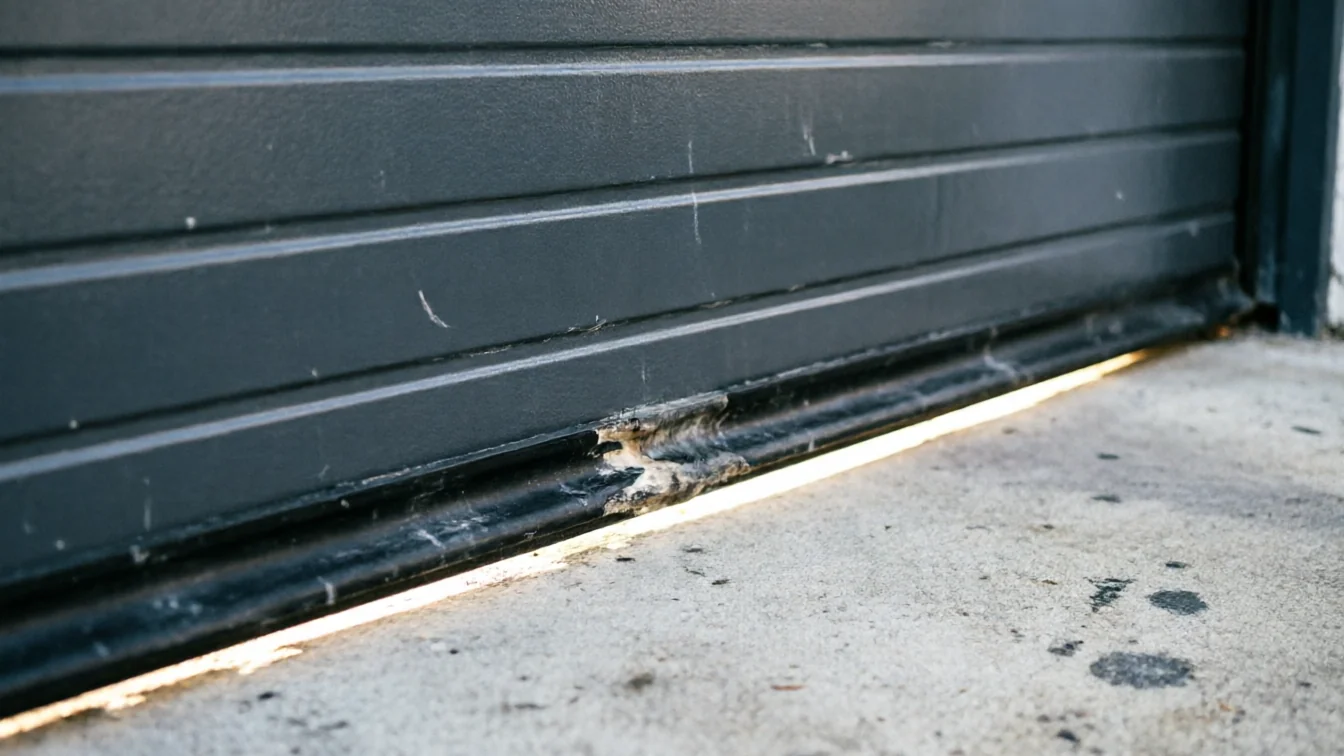
Not every noise or stiff spot needs a same-day call. A door that's slightly louder than it used to be, or a little slower to open in the first cold snap, is usually just telling you the lubricant has dried out - common on hardware that's been in place since the 80s and 90s and has maybe been oiled once or twice since. If the door still opens and closes evenly, reverses properly when it hits something, and the cables look intact, you can plan a maintenance visit instead of an emergency one. The exception is anything involving the torsion spring itself: if you can see a gap in the coil, don't wait, because that spring is under enough tension to cause real injury when it lets go. For everything else - stiff rollers, a chain that needs tensioning, weather seals and draughts along the bottom edge - a scheduled visit gets you the same result as an emergency one, for less money and without the truck roll premium.
What we find
What Local Conditions Do
This area sits in a cold-severe climate band, and that matters more on older doors than new ones. A panel built in 1984 wasn't engineered with the insulation standards used today, so the metal contracts hard in winter, and any gap in the bottom seal turns into a draft fast. On steel sections from that era, the cold also makes the galvanized coating more brittle at the edges, which is where we see rust start on doors that are otherwise sound. Openers are affected too - the lubricant in an original chain-drive unit thickens in cold weather, which is why so many of the calls about a door that 'won't fully close anymore' come in right after the first hard freeze. None of this is about one bad storm. It's the yearly cycle of freeze and thaw working on hardware and seals that are three or four decades into a service life that was never meant to be indefinite.
How we work
When It Stops Being a DIY Job
Tightening a loose bracket or swapping a worn roller is reasonable weekend work on most of these older doors. Replacing a torsion spring, realigning a track that's pulled away from the frame, or touching anything on a door that's visibly sagging on one side is not - the spring alone can cause serious injury, and a misjudged track adjustment on a door this old can bend a panel that's already brittle from age and cold. With 97,578 households and 53,424 owner-occupied houses in this service area, we see a wide range of what people are willing to attempt themselves, and a median household income of $80,814 means replacement is usually affordable when repair isn't worth it anymore. Our limitation here is straightforward: on doors built before the mid-90s, matching panels or exact hardware is often not possible, since that stock was discontinued years ago. At that point we're honest that a full replacement makes more sense than chasing parts that no longer exist.
Questions
Common questions
Why do so many garage doors in Florence seem to fail around the same age?
Because so much of the housing here was built in a tight window - 1938 to 2005, with the median around 1984. Doors and openers installed during that run are all hitting the end of their spring cycle life and opener gear life at roughly the same time, which is why it can feel like everyone's door is failing at once.
Does the cold really affect my garage door that much?
Yes, especially on older doors. This area sits in a cold-severe climate band, and a panel from the 1980s or 90s wasn't built to today's insulation standard. Metal contracts, seals shrink, and opener lubricant thickens, which is why doors that worked fine in fall suddenly stick or won't fully close once the first hard freeze hits.
Can I just replace the spring myself?
We'd rather you didn't. A torsion spring on a door this size is under enough tension to cause a serious injury if it releases wrong, and that risk doesn't change with age or experience. Rollers, hinges, and weather seals are fair DIY territory. Springs and track alignment are not.
Is it worth repairing a door from the 1980s or should I replace it?
Depends on the door. If it's structurally sound and the problem is a spring or opener, repair makes sense. If panels are discontinued or the frame has shifted with age, we're upfront that replacement is usually the better money, since matching 40-year-old hardware isn't always possible.
Recommendation
You Might Also Like
More garage door guides for Florence homeowners.
What Florence's 1980s Housing Stock Means for Your Garage Door
Florence homes mostly date to the 1980s and sit in a cold-severe climate band.
 What Your Garage Door Is Trying to Tell You in Florence
Florence homes date mostly from 1938 to 2005, and cold winters stress aging torsion hardware.
 What Power Cuts Do to Garage Door Openers in Florence, KY
In Florence, KY, houses built between 1938 and 2005 mostly run openers from the 1980s and 90s, and cold-weather power cuts hit these older units hardest.
Ready when you are
Need a garage door sorted in Florence?
Florence Garage Door Pros repairs and installs garage doors, springs and openers in Florence, KY and the surrounding area.