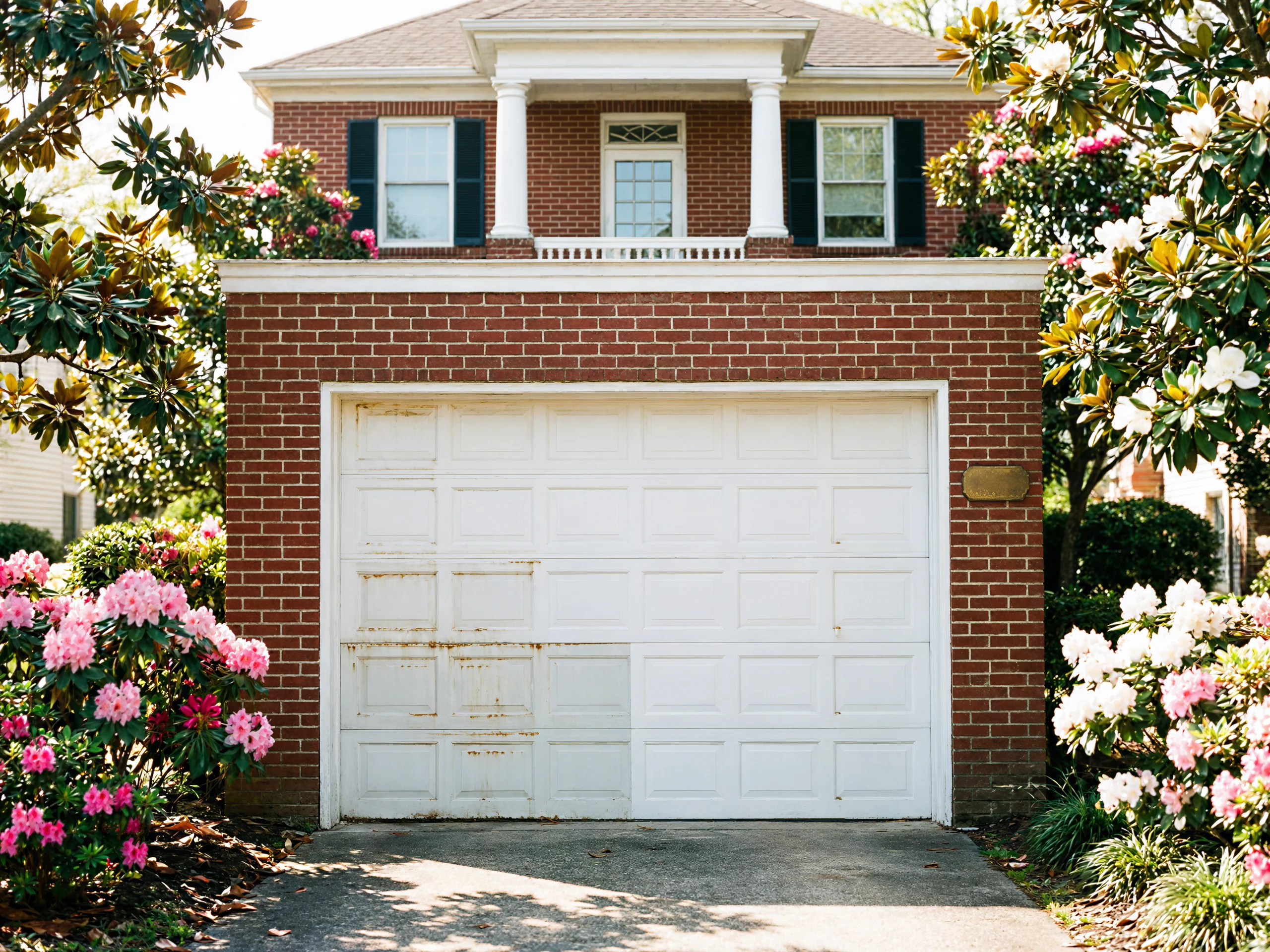
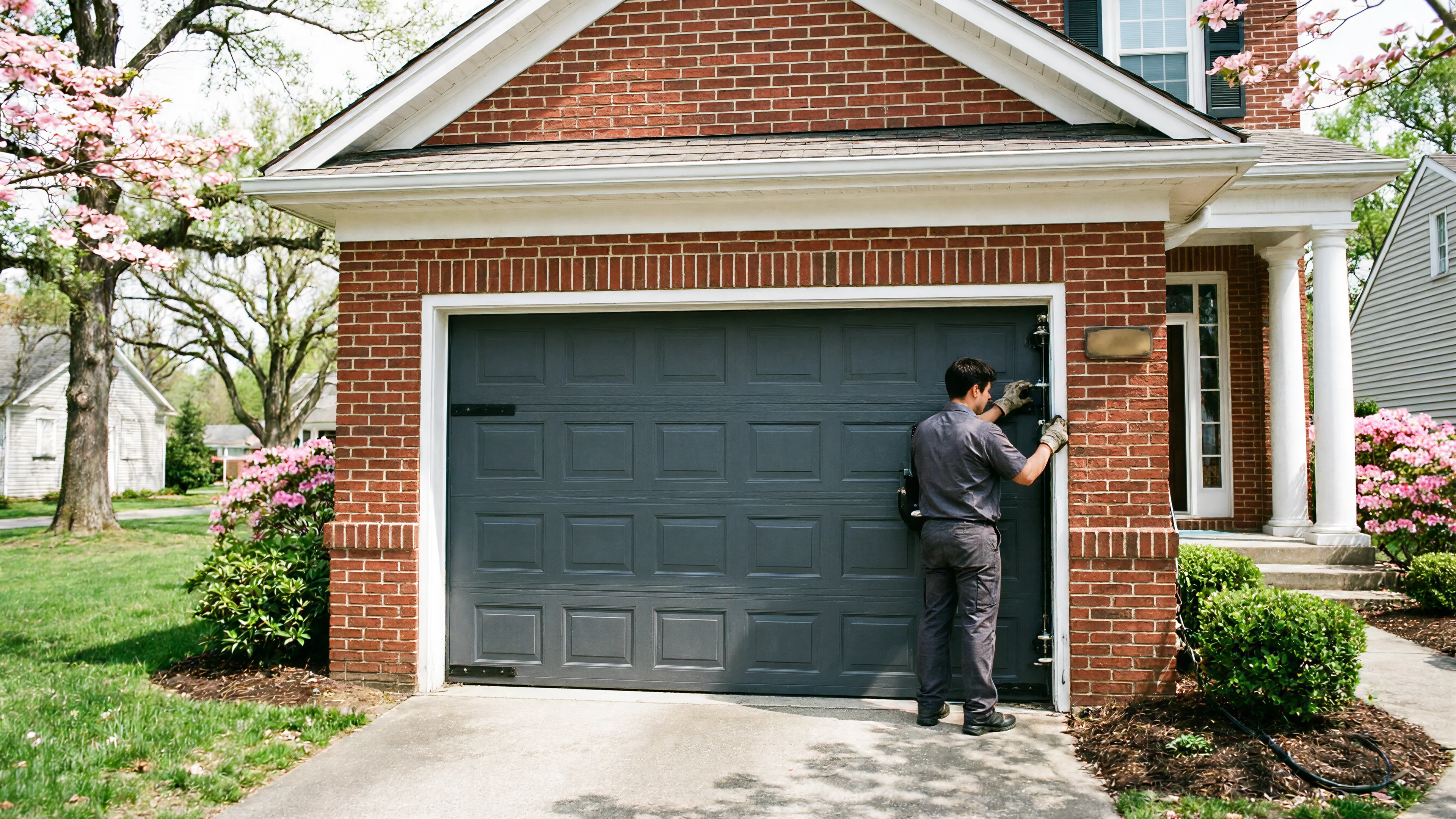
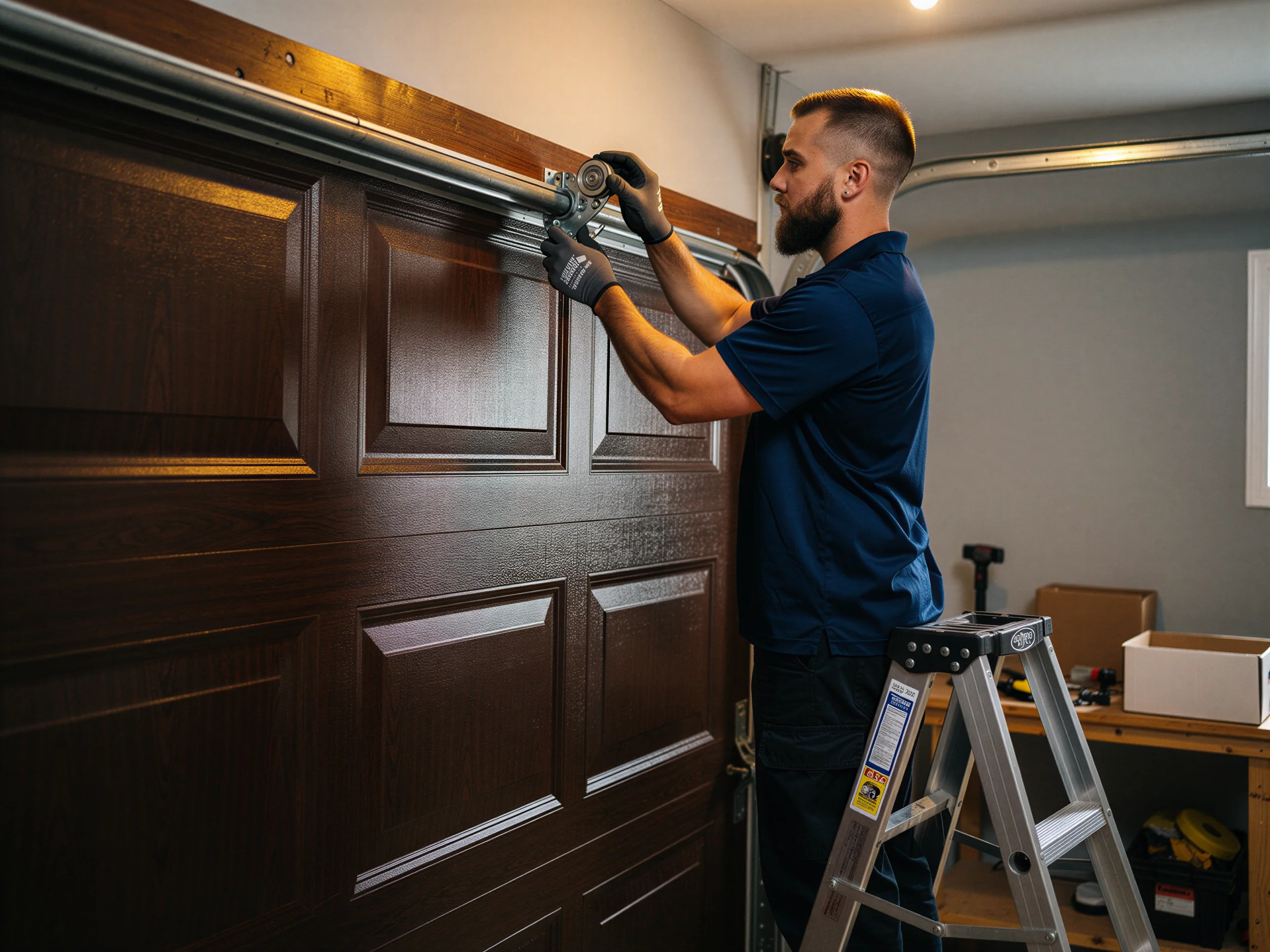
Florence sits in a cold-severe climate band, and that matters more for panel integrity than people assume. Steel panels expand and contract through freeze-thaw cycles every winter, and on doors built in the 1980s and 90s - which describes most of the housing stock here - the foam insulation bonded to the steel skin has had three or four decades of that cycling. The bond weakens, the panel skin separates slightly from the foam core, and a hit that would have just dented a newer insulated panel instead causes the whole section to buckle or crack along a seam.
The other factor is water. A cracked seam on an older panel lets moisture into the foam core, and once that happens the panel holds water through every freeze cycle, which accelerates rust from the inside out. You won't see it from the driveway - you'll see a panel that looks fine in October and is visibly bowed by February. This is a direct consequence of the age of the door stock combined with the cold winters here, not a defect specific to any one brand or install.