
Build year sets expectations
What makes the jobs worth knowing in advance is the age of the housing: the median build year here is 1976, a full eight years ahead of the 1984 median across the wider service area we cover out of Florence.
Edgewood, Florence
Edgewood homes mostly went up around 1976, a decade before the service area's 1984 median. That earlier build year changes which panel widths and gauges actually fit.
Job timing
Edgewood is a small town by household count, 3,315 of them, which means the panel work out here is steady but not constant. We're not running three trucks a day through the same five streets.
What makes the jobs worth knowing in advance is the age of the housing: the median build year here is 1976, a full eight years ahead of the 1984 median across the wider service area we cover out of Florence.
That gap matters more than it sounds like it should. A door hung in the mid-70s was built to a different panel width standard than one hung in the late 80s or 90s, which is what most of the surrounding area is working with.
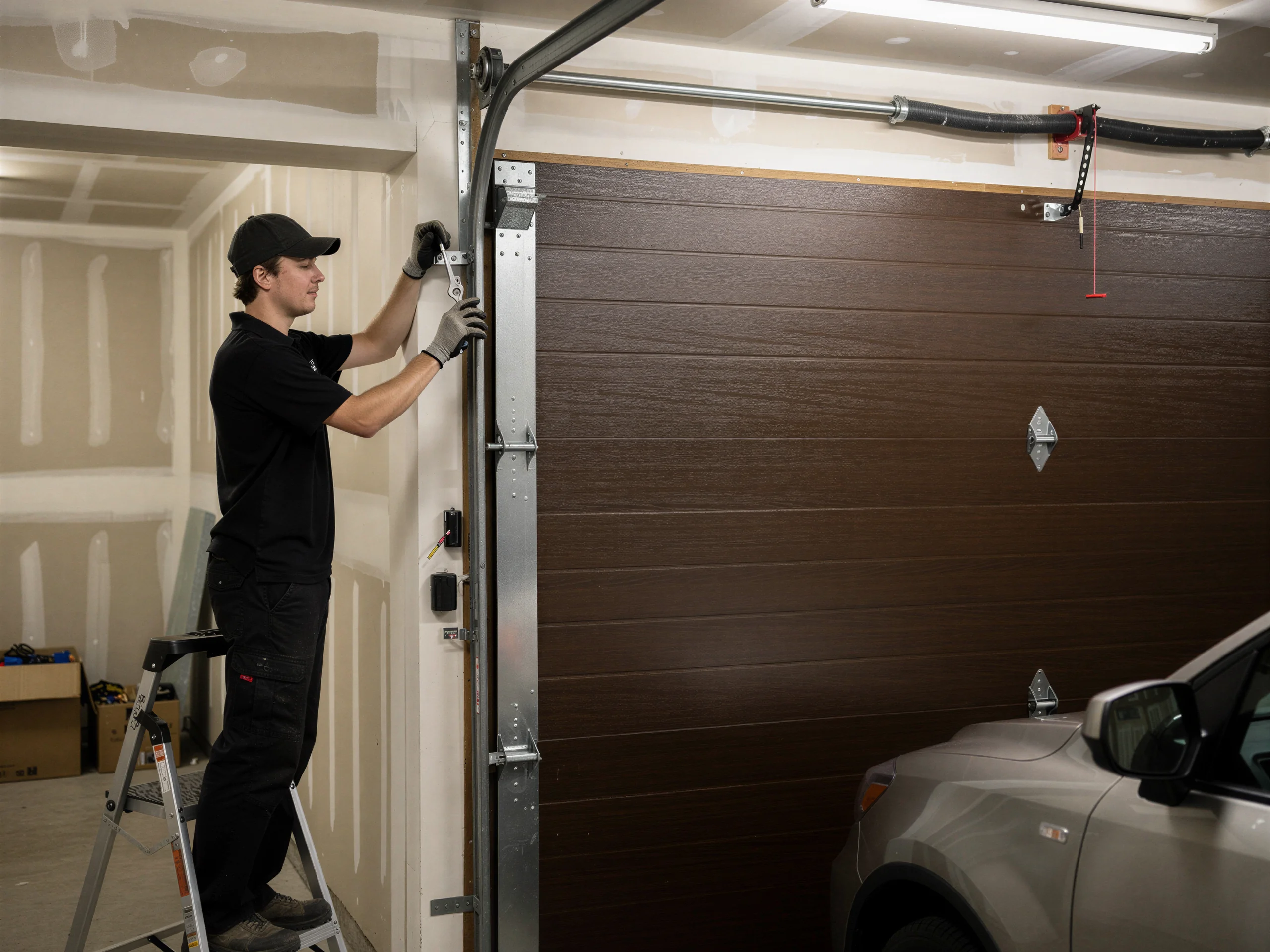
So when a panel cracks or buckles on a 1976-built Edgewood garage, it's not always a drop-in match with the stock profile that fits three-quarters of the houses five miles down the road in Florence. We measure before we quote, every time, because guessing on a door this age costs the customer a second trip.
Warning signs
On a street of mid-70s builds, panel failure tends to show up as a slow problem that gets loud all at once. Steel panels from that era, especially on doors that were never upgraded, run thinner gauge than what's sold today, and this region sits in a cold-severe climate band.
Freeze-thaw cycling works at the seams between panel sections over decades, and once moisture gets behind a joint the rust spreads along the bottom rail before it's visible from the driveway.
Dented panels are the obvious call - a backed-into door, a thrown ball, a trailer hitch - but on a 1976 door the dent often reveals rot or rust underneath that wasn't there to see from outside.
We also see misalignment: a single panel sagging slightly out of plane with the others, which usually means the hinge screws have worked loose in wood that's nearly fifty years old. None of this is Edgewood-specific damage, but a town built in this window sees it earlier and more often than a street of 1995 houses would.
On the truck
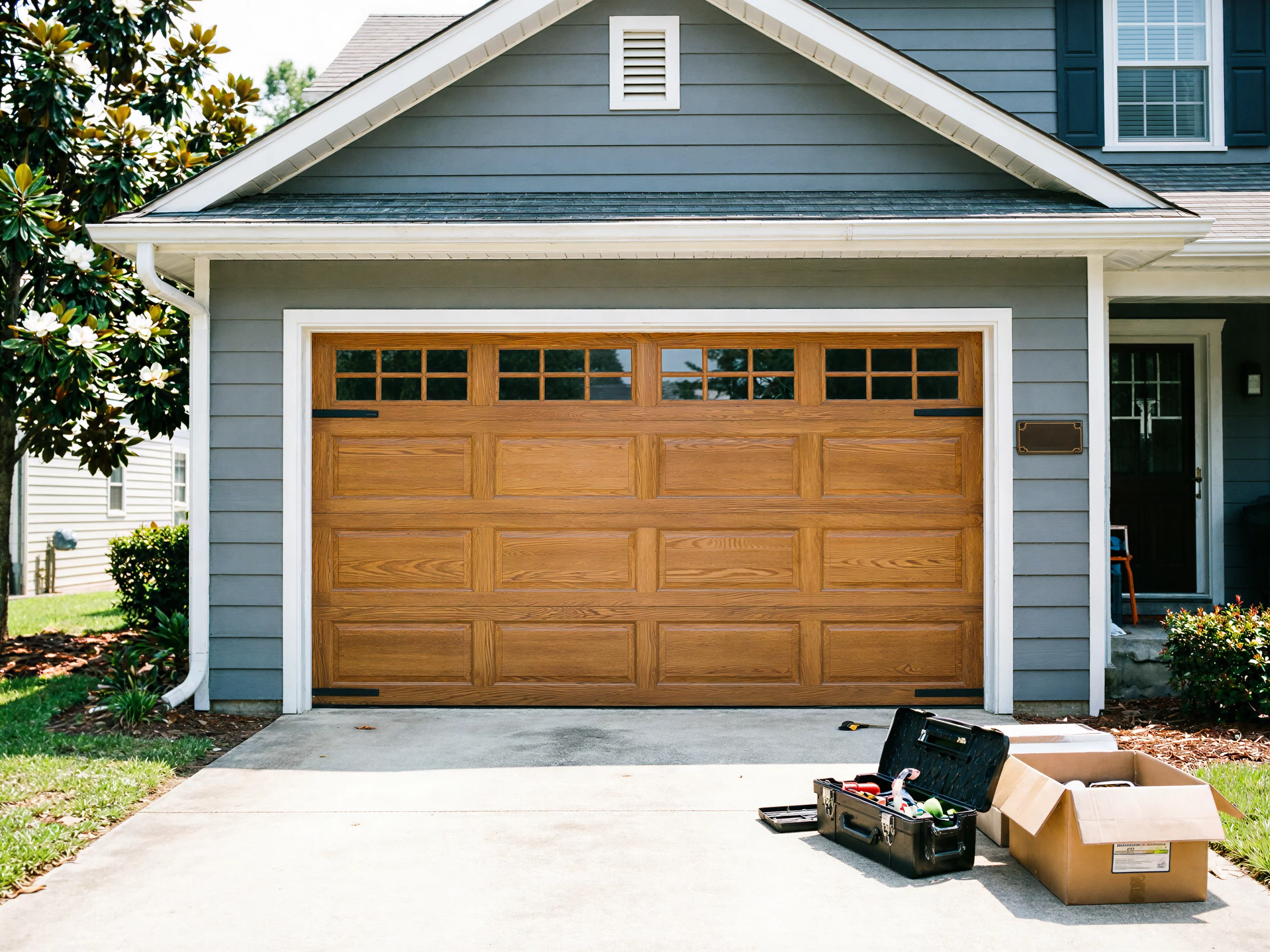
For a panel job we carry common steel sectional widths and a few insulated options, but we'll say plainly: we don't stock every discontinued 1970s profile, and nobody does.
If your door is an original 1976-era panel that was never replaced, there's a real chance the exact groove pattern or rib spacing isn't something we can match off the truck that day.
In that case the honest move is a full-door panel set rather than a single matched panel, and we'll tell you that up front rather than force a mismatch that looks wrong from the curb.
Where the stock does line up - most doors that got a panel swap sometime in the 80s or 90s, which is common across the broader area - we carry standard widths, raised and flush panel styles, and insulated cores suited to the cold-severe winters here. We travel in from Florence for every Edgewood call, so what's loaded that morning is what we have; a rare profile may mean a short order wait rather than a same-visit fix.
Booking
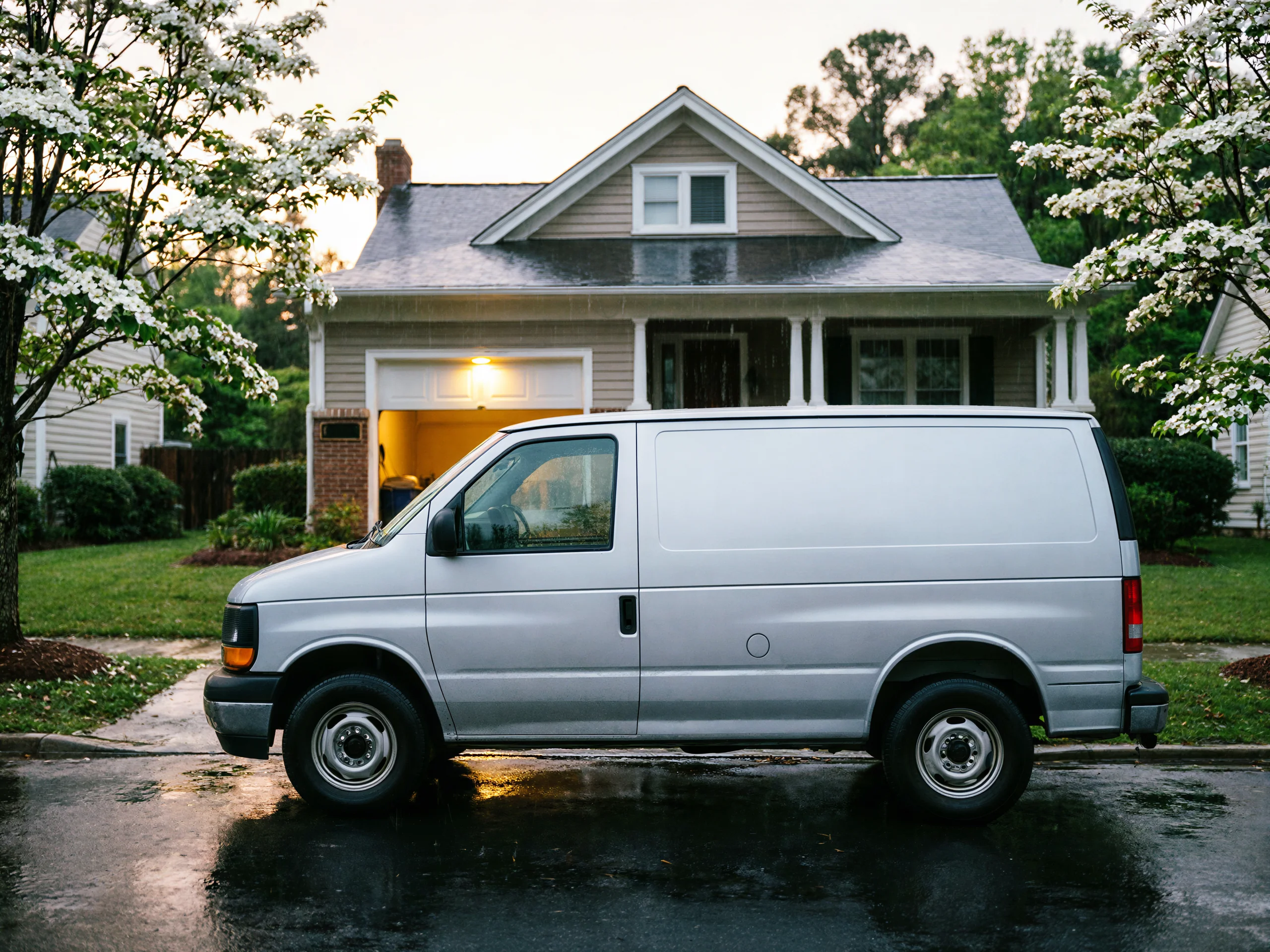
We cover Edgewood out of Florence, about five miles up the road, so there's no local yard or drop point here - just a truck that comes when you call. Given the household income median of $121,045 in this area, we see more owners here choose a full matched-panel replacement over a patch-and-hope repair, since the cost difference over the life of the door is usually small and the look stays uniform. That's not a rule, just what tends to get picked. When you book, tell us the rough age of the house if you know it; a 1976 build versus a door that was swapped out more recently changes what we load before we leave the shop. You can see what else we handle in Edgewood on our area page, or compare this job to how it runs in Florence itself.
Local causes
A generic panel replacement page written for the whole service area would tell you to expect a late-80s or 90s-style door, because that's what most of the 31 named communities we cover are sitting on. Apply that assumption in Edgewood and you'll quote the wrong panel width more often than not, because this town's median build year sits a decade earlier at 1976. The fault isn't dramatic - a panel is a panel - but the dimensions, the mounting hardware spacing, and sometimes the track gauge behind it don't match what's common five or six miles away in the newer pockets of the service area. A crew that doesn't check the build year first will show up with the wrong panel on the truck, and that's a second trip nobody wanted. Edgewood isn't a big town, and it doesn't need a different crew, but it does need someone who measures before they load the truck, not after.
Questions
Sometimes, but not always as a single matched panel. Original 1976-era profiles can be discontinued, so if your door was never replaced we often recommend a full panel set rather than chasing an exact match for one section. We'll check the width and rib pattern on-site before ordering anything.
Houses here were mostly built around 1976, but doors get replaced at different times. A panel swapped in the 90s will have a different width and profile than an untouched original, which is common in a town this size where renovation timing varies house to house.
No. We run out of Florence, about five miles away, and travel in for every Edgewood call. There's no local yard here, so what's loaded on the truck that morning is what's available that visit.
It depends on the door's age and whether a matching panel still exists. On older 1976-era doors, a single patched panel can look mismatched or simply not be available, so a full matched set is often the more sensible call even though the upfront cost is higher.
Explore more
Ready when you are
Florence Garage Door Pros repairs and installs garage doors, springs and openers in Florence, KY and the surrounding area.