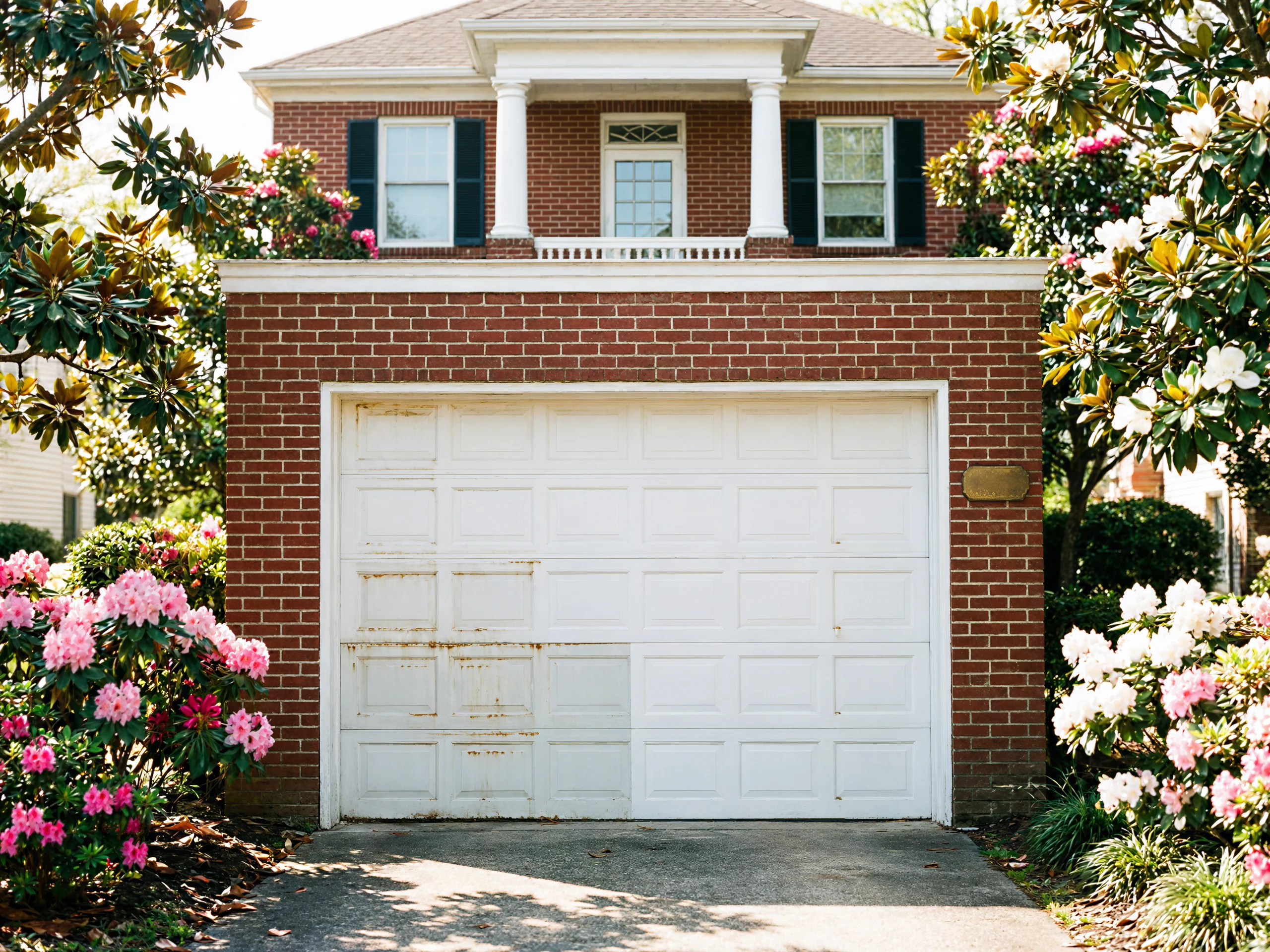
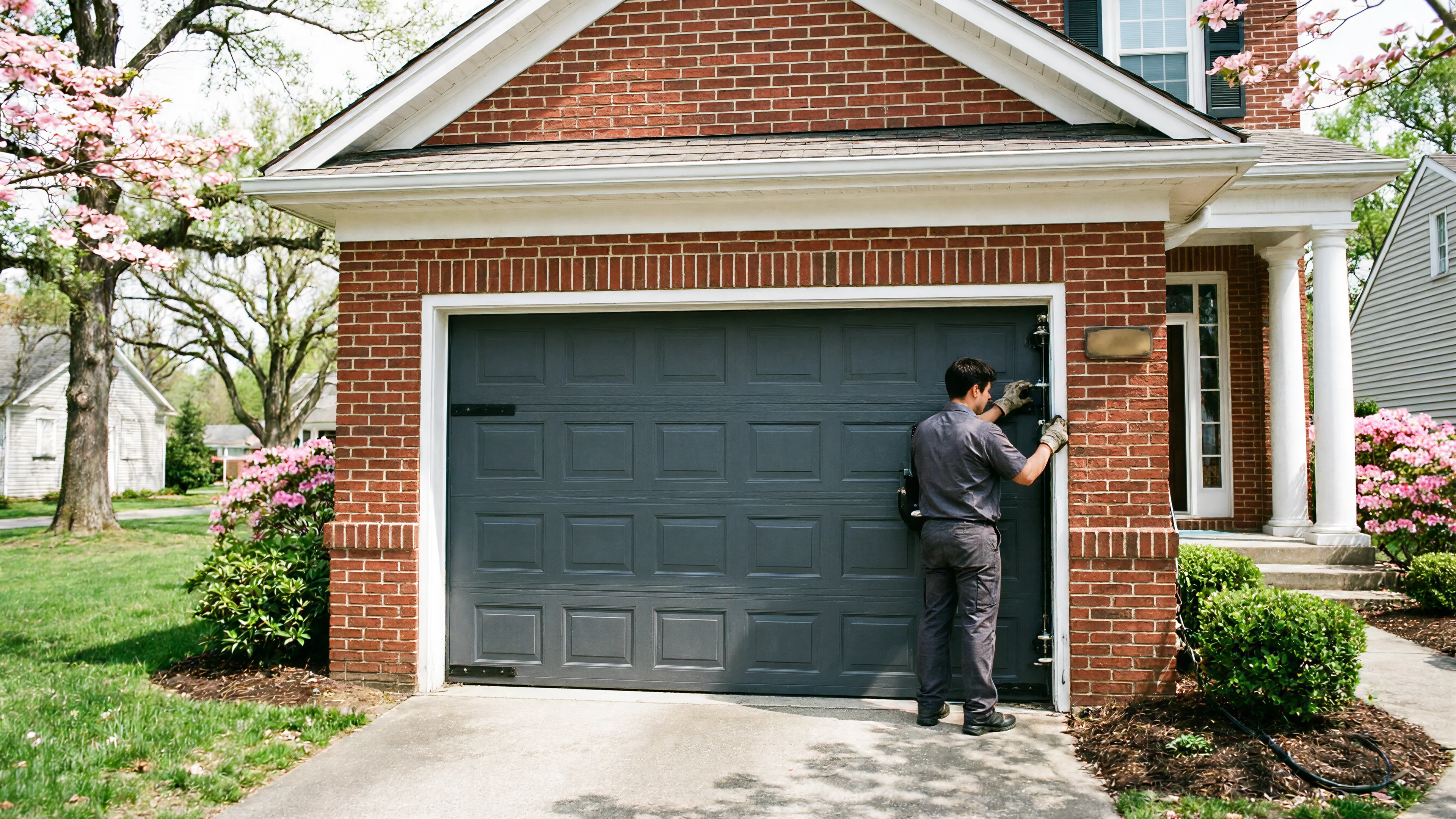
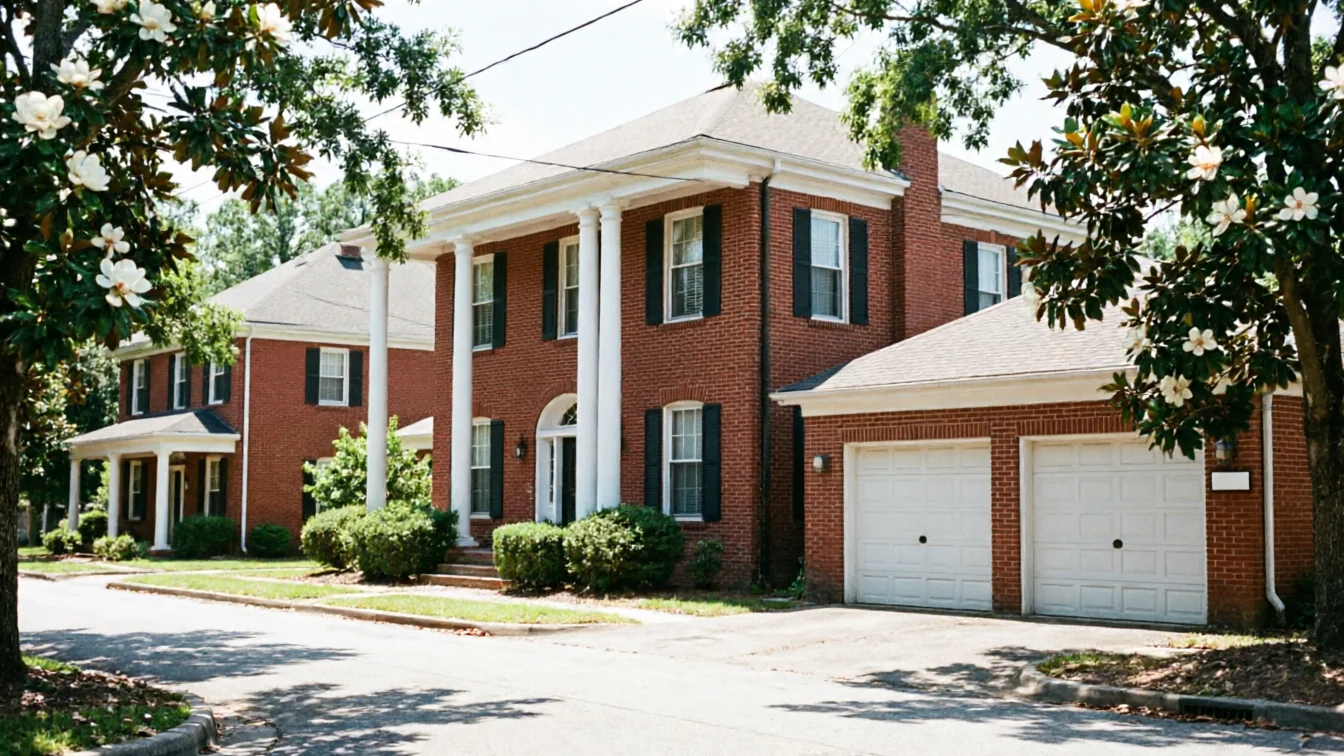
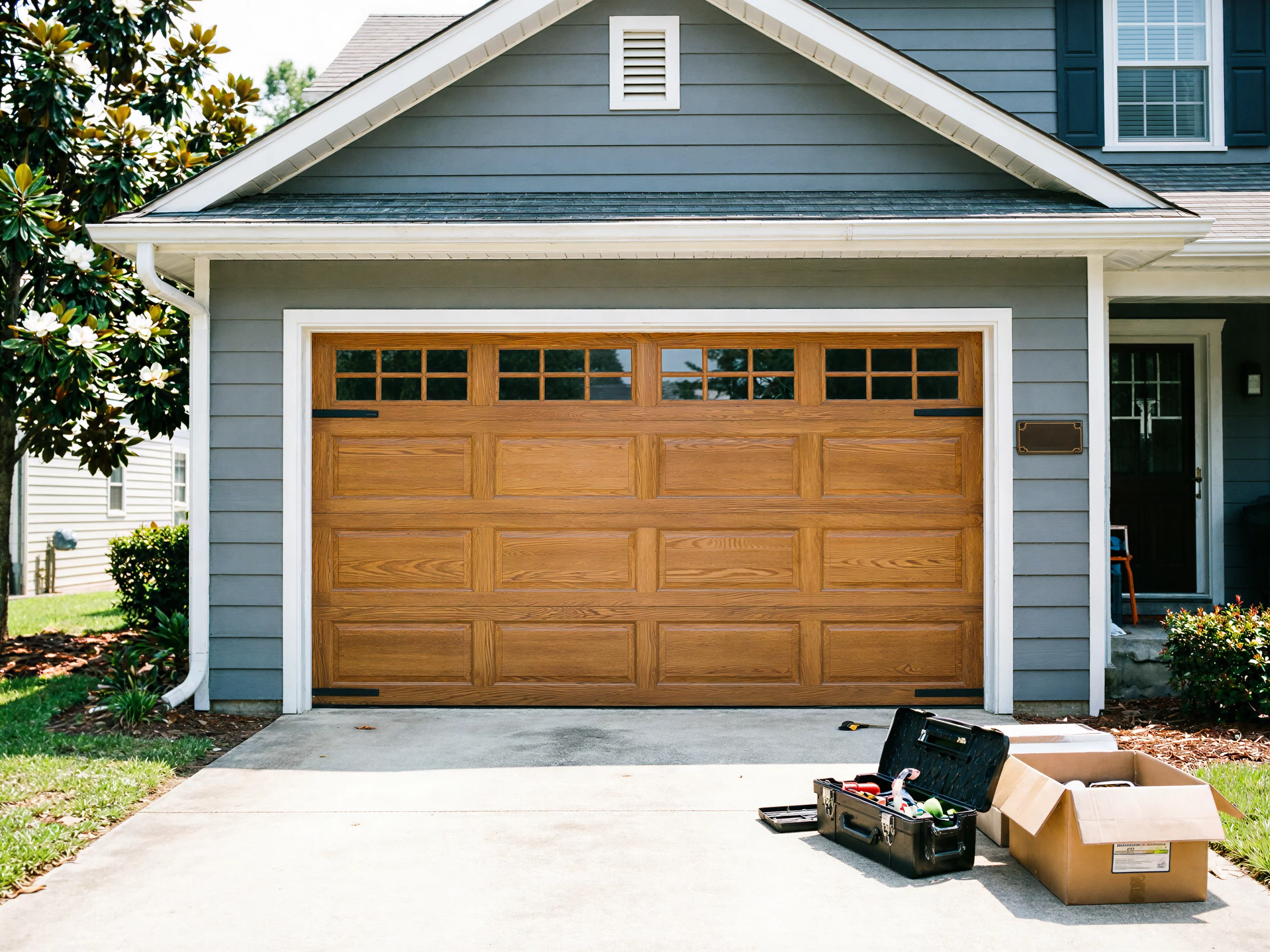
Most houses in Independence went up around 1999, which puts the doors squarely in the raised-panel steel era - factory insulation already built into the skin, not the thin single-layer steel or old wood doors you'd find on the older stock closer in toward Florence. These doors came in wider two-car openings, usually 16 feet, with long panel runs that flex more than a single-car door ever does. The panels themselves are stamped steel with a foam core bonded between two skins, and that bond is the weak point. Once the skin separates from the foam, or a panel takes an impact, you can't just push it back into shape - the core doesn't hold its form the way solid wood did on older doors. Add Kentucky's cold winters to that, and the foam-backed panels crack along the stamped seams where they flex the most, especially on the bottom section that catches road spray and salt in winter. Because the service area runs cold and severe through the season, that seam cracking shows up every year, not as a one-off. It's a door style issue tied to when these subdivisions were built, not a defect in any one door - it's just what happens to foam-core steel panels on wide double doors after two decades of winters.